How to Create the Perfect Study Space in a Student Apartment

Deniz Barış Ejderoglu
Tentunit Editorial
Creating a comfortable study space inside your student apartment can make a meaningful difference in how you approach academic work throughout the semester. While university libraries and campus study lounges offer useful environments, having a dedicated area at home provides flexibility when you need to finish assignments, attend online meetings, or prepare for examinations. The ideal study space does not necessarily require a separate room or expensive furniture. What matters most is establishing an environment where you can concentrate without constantly rearranging your belongings or dealing with unnecessary distractions. Even students living in relatively small apartments can build a functional workspace by choosing the right location, organizing essential materials, and making thoughtful decisions about lighting and furniture.
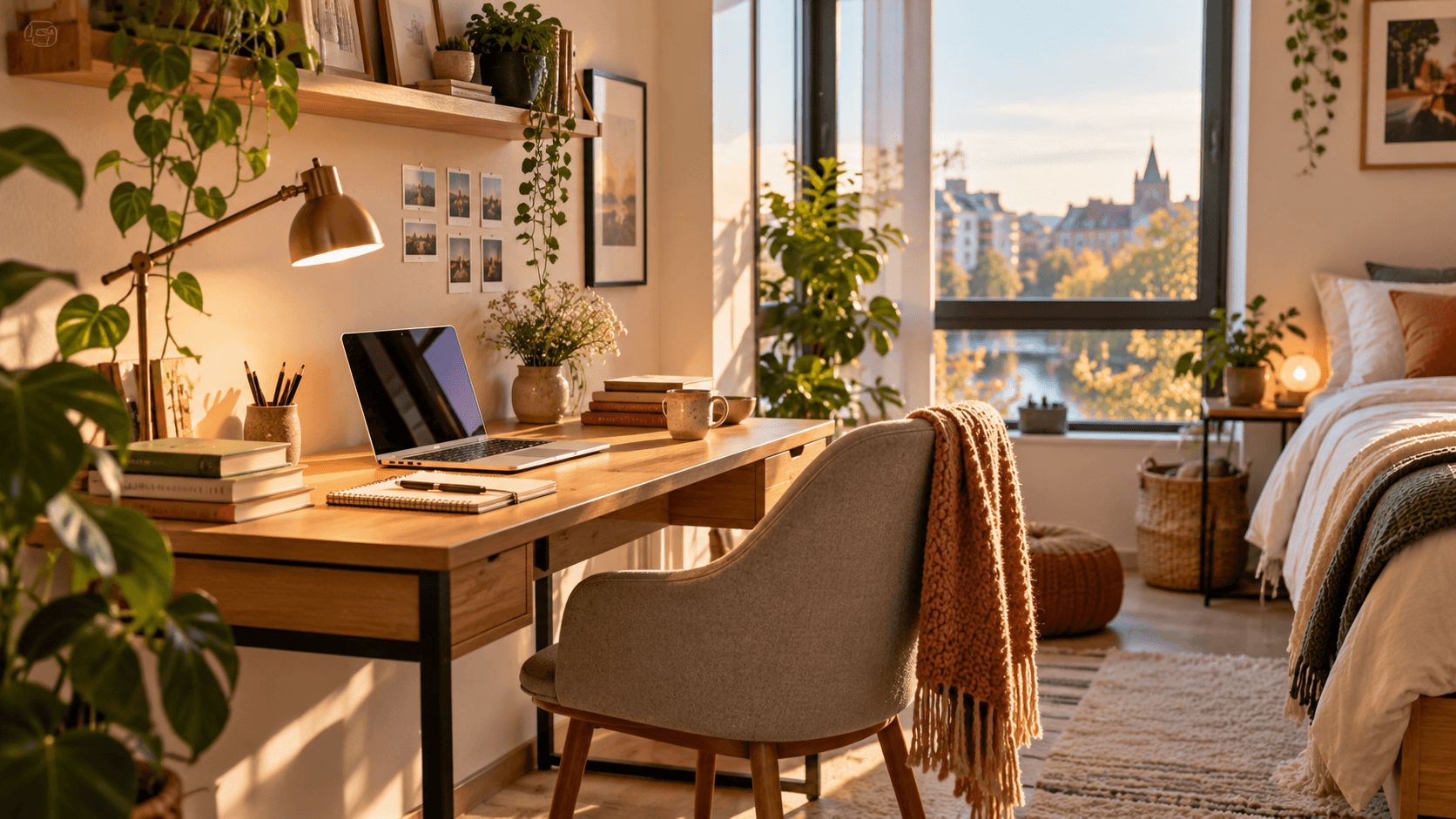
The location of your study area should reflect how you prefer to work. Some students concentrate best near windows where natural light creates an open and comfortable atmosphere, while others prefer a quieter corner away from shared living spaces. If possible, position your desk somewhere that separates academic activities from areas primarily associated with sleeping or entertainment. A comfortable chair and appropriately positioned desk can also improve your experience during longer study sessions. Lighting deserves particular attention because it influences how comfortable the space feels throughout the day. Natural light is valuable when available, but a desk lamp can provide more consistent illumination during evening study sessions. The goal is to create an environment that encourages concentration without making the apartment feel overly formal or disconnected from everyday living.
Organization is equally important when designing a productive workspace. Keeping textbooks, notebooks, chargers, and other frequently used materials within reach helps reduce interruptions during study sessions. Simple storage solutions such as small shelves, desk organizers, and drawers can prevent your workspace from becoming crowded with unrelated belongings. Digital organization can complement these physical habits by helping you keep track of assignments, deadlines, and course materials. Personal touches can also make studying more enjoyable. A small plant, a favorite photograph, or a minimal decorative element can add personality without creating visual clutter. Since studying is a regular part of college life, making the space comfortable and inviting may encourage you to use it more consistently.
A well-designed study area should ultimately adapt to your academic needs. During busy weeks, you might use the space for extended writing sessions or exam preparation, while at other times it may serve as a place for reading, creative projects, or virtual meetings. Students sharing an apartment should also consider how their workspace fits into the routines of others, particularly when multiple roommates need quiet environments simultaneously. As you explore student apartments through platforms such as Tentunit, think about where a study area could fit within each available layout. You do not need a large apartment to create an effective learning environment. With thoughtful lighting, practical organization, and a comfortable setup, even a modest corner can become one of the most valuable parts of your student home.